


What manufacturing checks most influence pressure stability in sealed aerosol packages?
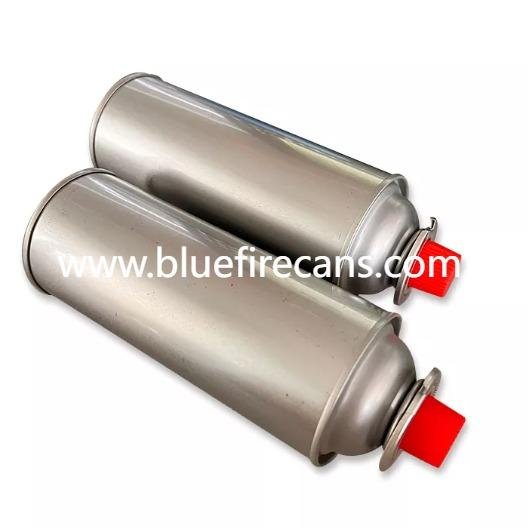
When engineers think about product reliability the subtle balance of components often decides whether a package performs reliably in market. An Aerosol Can hides a small ecosystem of choices inside its walls and the internal pressure stability that users rely on depends on chemistry materials and handling as much as on visible parts. Pressure behaviour matters for safety, for dose consistency and for how a product travels from production to consumer.
Propellant properties set the starting conditions. Different propellant chemistries respond differently to temperature and to container headspace. A formulation that vaporises readily at moderate temperatures will present a different pressure profile than one that leans on heavier components. Manufacturers must match valve sizing and metering passages to the propellant characteristics so that the pressure a user sees at the actuator translates into consistent spray behaviour.
Filling accuracy and headspace control are practical production levers. How a can is filled and how much vapour is left above the liquid influences how pressure changes when temperature shifts during transport or storage. Tight filling tolerances reduce variability from unit to unit and make downstream pressure predictions more reliable. In practice, small changes in fill procedure can reduce field reports of unexpected sputter or overpressure sensations.
Seal performance and valve integrity are central. The O rings, gaskets and seat surfaces that keep a can closed must resist chemical exposure and mechanical wear. Elastomer choices and surface finishes determine whether a seal stays supple across temperature swings or whether it hardens and leaks. Valves that show minute seepage might still appear fine in initial inspections yet create a slow drift in internal pressure that alters product behaviour over time.
Material permeability and can construction matter beyond obvious strength. Metal bodies are chosen for structural reasons but internal linings and polymer components affect permeability and chemical interactions. Some liner systems help block active molecules from attacking metal and seals; others can influence how residual vapour equilibrates within the headspace. Selecting materials that are compatible with both the formulation and with expected storage conditions reduces unexpected pressure shifts.
Temperature and environment are everyday stressors. Transport through hot docks, sitting in warm retail backrooms or being left in cold vehicles all change internal vapour pressures predictably. Designing for the range of conditions a product will meet in the real world reduces surprise at the shelf. That means testing under varied temperature profiles and modelling how pressure will evolve during a typical distribution route.
Age and storage history alter performance too. Seals slowly age, residual traces of contaminants may accumulate, and repeated thermal cycling can relax spring tensions or alter valve response. That is why inventory turnover and storage discipline are operational actions that influence pressure stability. Fresh product that moves quickly through the supply chain generally shows fewer field anomalies tied to pressure drift.
Manufacturing quality control ties the factors together. Automated inspection that checks fill mass valve torque and leak rate provides data that make downstream behaviour more predictable. Batch level traceability lets procurement and service teams map a field issue back to a particular production run and to the environmental conditions units experienced during packing and shipping. That traceability shortens response time and limits corrective action scope when anomalies appear.
Handling and transport practices moderate mechanical risk. Dents, repeated impacts or rough pallet handling can deform valve geometry and change seal seating. Protective caps, inner cradling and sensible pallet patterns reduce mechanical insult. When logistics partners treat packaging as fragile technology rather than as simple merchandise the number of units that arrive with compromised pressure behaviour declines.
User instructions and packaging cues help close the loop. Clear guidance on storage orientation, safe temperature ranges and on how to interpret odd spray behaviour empowers retailers and consumers to act before a small change becomes a service incident. Simple labels near the actuator that advise on upright storage and on avoiding long exposure to heat reduce the number of questionable returns.
Regulatory and market shifts also shape expectations. As low impact propellant options gain traction and as recycling requirements evolve, manufacturers must demonstrate how new materials and chemistries affect pressure behaviour across the product lifecycle. That is why pilot fills and public facing test notes help procurement, compliance and retail teams weigh trade offs with practical evidence rather than with theory.
Testing protocols that reflect realistic conditions are essential. Bench numbers are useful but repeated actuation trials, transit simulations and thermal cycling tests reveal behaviors that only appear in the field. When engineering teams include valve actuation profiles and user scenarios in validation runs the product is less likely to surprise customers after launch.
Sustainability and lifecycle thinking intersect with pressure stability. Choices that reduce trapped residual product or that enable cleaner emptying influence how a can behaves at end of life and during recycling. Designing for safe emptying and for stable pressure across expected handling reduces the chance of incidents at collection points and supports retailer sustainability narratives.
For product teams the practical path is collaboration and iteration. Early coordination between formulators, valve engineers and packaging specialists speeds identification of pressure risks and of mitigation options. Sample prototypes evaluated under realistic handling and storage conditions provide the data needed to make confident choices. When production controls, materials selection and logistics planning align the result is a product that meets both regulatory expectations and user needs.
If procurement or engineering teams want to examine valve options, protective packaging strategies and documented testing practices that influence pressure stability, suppliers that provide pilot samples and traceable inspection records make qualification simpler. For details on components, valve variants and compatible packaging choices visit https://www.bluefirecans.com/ .

 English
 Arabic
 French
 Spanish
 Portuguese
 Turkish
 Dutch
Dutch
 Italiano
 Russian
 Romaian
 Portuguese (Brazil)
 Greek
Greek
