


Kunliwelding: Can Your Wire Source Support Qualification?
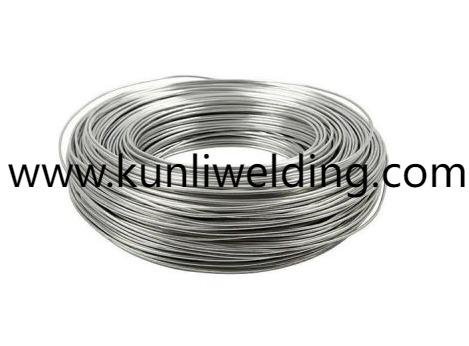
Quality assurance in metal fabrication depends on carefully documented procedures that prove processes can deliver consistent results. When engineers prepare for welding procedure qualification, they often overlook a critical partner in the validation process. Aluminum Alloy Welding Wire Suppliers contribute far beyond simply shipping materials to job sites. Their involvement shapes how qualification tests unfold and whether projects meet stringent acceptance criteria.
Welding procedure qualification represents a formal demonstration that specific techniques produce acceptable joints. This validation requires precise control over numerous variables including heat input, travel speed, joint geometry, and filler material composition. The wire supplier enters this equation by providing detailed documentation about chemical composition, mechanical properties, and manufacturing consistency. Without accurate information from the source, qualification efforts become guesswork rather than scientific validation.
Material traceability forms the foundation of any credible qualification program. Inspectors and quality managers need certainty that the wire used during testing matches what will be used in production. Suppliers maintain batch records and certification documents that connect each spool to specific production runs. This chain of custody ensures that qualification tests genuinely represent field conditions rather than random sampling that might not reflect actual supply.
Chemical composition variations, even within specification limits, can influence weld behavior in subtle ways. A supplier who understands this reality provides narrow tolerance materials for qualification testing. This precision allows welding engineers to develop procedures with appropriate safety margins. When composition varies wildly from batch to batch, procedures must be overly conservative to account for worst case scenarios. Consistent supply enables tighter process windows and improved productivity.
Technical support from wire manufacturers helps troubleshoot problems that emerge during qualification trials. Unexpected porosity, cracking, or mechanical property failures often trace back to material interactions rather than operator technique. Supplier metallurgists can review test results and suggest adjustments to welding parameters or preheat requirements. This collaborative problem solving accelerates qualification timelines and reduces costly trial and error.
Storage and handling recommendations from suppliers prevent material degradation that could invalidate qualification results. Aluminum Alloy Welding Wire absorbs moisture and surface contaminants that create defects during welding. Proper packaging and clear instructions about environmental controls ensure that qualification samples represent the material in its intended condition. Tests conducted with degraded wire produce misleading results that don't predict field performance.
Qualification documentation must demonstrate that procedures remain valid across the range of materials that might be used in production. Suppliers who offer consistent product lines simplify this challenge. When wire chemistry and manufacturing methods stay stable over time, a single qualification can cover extended production periods. Frequent reformulations or process changes force repeated testing that consumes time and resources.
Joint design considerations interact with filler material selection in ways that affect qualification strategies. Suppliers with application experience can recommend wire diameters and compositions suited to specific joint configurations. This guidance helps welding engineers choose test parameters that align with actual fabrication requirements. Qualification tests that don't reflect real joints provide false confidence and can lead to field failures.
Mechanical testing during qualification reveals whether welds meet strength and ductility requirements. The wire supplier's specified properties serve as a baseline for expected performance. When test results fall short, comparing actual wire composition to supplier certificates helps identify whether material variation contributed to the problem. This diagnostic capability speeds root cause analysis and corrective action.
Welding procedure specifications reference filler materials by classification codes that indicate composition ranges and intended applications. Suppliers ensure their products conform to these standards through routine testing and quality control. This conformance gives qualification engineers confidence that substituting one conforming wire for another won't invalidate procedures. Industry standards work only when suppliers maintain compliance.
Revision control becomes crucial when suppliers update product formulations or manufacturing methods. Advance notification allows fabricators to reassess whether existing qualifications remain valid or require revalidation. Suppliers who change products without informing customers create compliance risks and potential safety issues. Transparent communication about product evolution protects both parties.
Training materials and application guides from wire manufacturers help welding personnel understand how to implement qualified procedures correctly. Even properly developed procedures fail if operators lack knowledge about material handling and technique requirements. Comprehensive support from suppliers extends beyond the qualification phase into daily production activities.
Long term supply relationships enable continuous improvement in both materials and processes. Feedback from qualification testing helps suppliers refine products to better serve fabrication needs. This iterative development produces materials that are easier to qualify and more forgiving in production. Partnership mentality rather than transactional relationships drives these improvements. For fabricators seeking dependable materials and technical collaboration that supports rigorous qualification programs, comprehensive resources await at https://www.kunliwelding.com/ .

 English
 French
 Spanish
 Portuguese
 Deutsch
 Turkish
 Dutch
Dutch
 Italiano
 Russian
 Romaian
 Portuguese (Brazil)
 Greek
Greek
