


Industrial Plug Socket Connector Performance By Nante
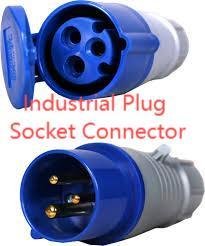
Reliable power connections are a cornerstone of industrial safety and uptime, so selecting the right Industrial Plug Socket Connector requires attention to electrical ratings, mechanical durability, and environmental sealing, and procurement teams increasingly demand solutions that simplify maintenance while reducing accidental mismating — the Industrial Plug Socket Connector must therefore combine robust contacts with clear keying, easy-to-service terminals, and proven ingress protection. This article breaks down technical specs, installation best practices, testing protocols, maintenance routines, and practical procurement tips for engineers and purchasers.
Electrical specifications and performance requirements
Start by matching the connector’s electrical ratings to your application. Confirm continuous current and rated voltage, short-time withstand values, and appropriate insulation class for the system’s maximum operating temperature. Consider the duty cycle: continuous motor feeds have different thermal demands than intermittent power for portable equipment. Contact material and plating affect contact resistance and thermal rise — copper alloys with silver or nickel plating are common for heavy-duty use. Also check dielectric strength and impulse-withstand ratings when the installation is exposed to transients or switching surges.
Mechanical design, sealing, and environmental protection
Mechanical robustness matters as much as electrical capability. Look for housings that resist impact, abrasion, and UV degradation if used outdoors. Verify ingress protection ratings (IP) or NEMA classifications appropriate to your environment; washdown or marine sites often require IP66/IP67 or higher. Sealing strategies — continuous gaskets, O-rings on mating interfaces, and properly rated cable glands — prevent moisture ingress. Locking collars, bayonet locks, or threaded coupling mechanisms reduce the risk of accidental unmating in vibration-prone settings.
Installation best practices and wiring tips
Correct installation extends service life. Use the manufacturer’s torque values on screw-type terminals and the specified crimp dies for crimp-style contacts — under- or over-crimping increases contact resistance. Maintain minimum bend radii and provide strain relief to prevent conductor fatigue. Where possible, pre-assemble and test assemblies on the bench to verify continuity and polarity before field fitting. Clearly label both plug and socket with circuit identifiers and keep a simple wiring diagram inside the nearest panel for rapid troubleshooting.
Nante Design & Modular Serviceability
Modular design simplifies field service and spare-part management. Standardized insert frames, replaceable contact modules, and keyed housings enable technicians to replace only worn or damaged parts without scrapping entire connectors. Look for manufacturers offering pre-wired replacement modules that match your installation’s footprint — this approach reduces downtime and spare inventory. Accessibility for inspection — removable covers and visible status indicators — accelerates routine checks and helps quickly identify degraded components.
Safety features, interlocks, and protective coordination
Prioritise safety-enhancing features such as interlocks that prevent energization while connectors are open, and mechanisms that ensure earthing before live contacts mate. Use keyed or coded systems to prevent mismating between different voltage classes or functional circuits. Coordinate downstream protective devices so faults are isolated locally without tripping unrelated circuits upstream. When lightning or switching transients are a concern, integrate surge protective devices close to the connector and ensure their status is easily inspected.
Testing, verification, and acceptance procedures
Insist on documented testing: contact resistance measurements, high-potential (hipot) testing, and thermal profiling under expected load are baseline checks. Mechanical endurance tests (mating cycles), vibration and shock tests, and salt-spray corrosion testing provide confidence for harsh environments. During site acceptance, perform insulation resistance and phase-sequence checks, plus a thermal scan under normal operating load to uncover hidden hot spots. Keep records tied to serial numbers for traceability and warranty support.
Maintenance schedules and condition monitoring
A simple preventive program prevents failures. Periodic visual inspections for corrosion, seal compression, and physical damage reveal early issues. Measure contact resistance at scheduled intervals — rising values often indicate contamination or loosened connections. Where reliability is critical, add temperature or resistance monitoring to detect degradation before it causes outages. Replace contact modules proactively based on usage cycles rather than waiting for catastrophic failure, and document all interventions to refine future maintenance planning.
Procurement considerations and lifecycle costs
Total cost of ownership includes spare parts, labor for servicing, and the cost of downtime. Favor designs that minimize field labor through modular replacements and offer commonly stocked spares. Verify lead times for replacement inserts and confirm the supplier provides clear installation and maintenance documentation. Check warranty terms and the availability of third-party test data. When comparing quotes, weight in the operational impact of a faster repair time or easier servicing even if unit price is higher.
In summary, specifying the right industrial connector is a systems decision that balances electrical requirements, mechanical resilience, safety interlocks, and serviceability. Prioritize tested components, clear installation practices, and modular replacement strategies to maximize uptime and reduce lifecycle costs. For a primer on connector types and technical background, see https://www.nante.com/news/industry-news/what-is-industrial-plug.html

 English
 Arabic
 French
 Spanish
 Portuguese
 Deutsch
 Turkish
 Dutch
Dutch
 Italiano
 Russian
 Portuguese (Brazil)
 Greek
Greek
