


How to Detect Wet Aluminum MIG Wire?
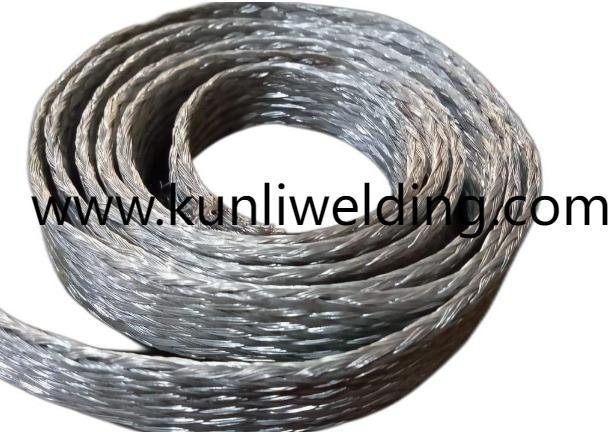
In the midst of expanding electric vehicle production and offshore renewable projects that rely on lightweight aluminum assemblies for efficiency and durability, welders increasingly encounter challenges from material condition affecting joint quality in frames, hulls, and supports. Aluminum Mig Wire Manufacturers address these by supplying alloys like those with magnesium and manganese for marine or structural use, but even reliable products suffer when moisture sneaks in during storage or handling. Recognizing contamination early prevents weak welds that could compromise safety in transportation or coastal builds.
Moisture in aluminum MIG wire often shows through visual cues on the spool. A dull or hazy surface replaces the usual bright shine, as absorbed water reacts to form oxide patches or white powdery spots resembling dust. These signs appear after prolonged exposure to humid shop air or damp packaging, especially in coastal yards where salt-laden mist accelerates the process.
During feeding, contaminated wire behaves erratically. It resists smooth payout, causing tangles or bird nests in the liner that halt progress mid-run. Stubbing at the contact tip becomes frequent, with the wire pushing back instead of melting steadily, leading to pauses that disrupt rhythm on long seams in vehicle panels or vessel plates.
Arc performance reveals deeper issues. The once-stable arc crackles or pops audibly, flaring unpredictably as trapped hydrogen escapes explosively from the molten pool. This instability scatters excessive spatter around the gun and workpiece, creating messy buildup that demands extra cleaning before continuing. In severe cases, the arc wanders, failing to concentrate heat for proper fusion.
Bead appearance tells a clear story. Instead of smooth, uniform lays, welds show scattered pinholes or worm tracks on the surface, indicating gas pockets bursting out as the metal cools. Deeper porosity hides inside, visible only under inspection but weakening the joint against loads or corrosion over time. Undercut or irregular profiles emerge too, as uneven melting pulls away from edges.
Post-weld, contaminated wire often leaves dark or discolored deposits, sometimes with a sooty residue from burned-off impurities. Joints may exhibit reduced ductility, cracking under minor bends during forming or testing, a concern for flexible components in rail cars or battery enclosures.
Aluminum Mig Wire Manufacturers design products like magnesium-enriched variants to tolerate minor variations, but moisture overwhelms these safeguards. Hydrogen from water dissolves easily into aluminum at high temperatures, only to precipitate as bubbles upon solidification, creating voids that invite fatigue failures in vibrating structures.
Shop humidity spikes during seasonal changes or after storms compound risks, turning sealed packs sweaty inside if not acclimated properly. Forklift damage to wrappers lets air in, starting a slow contamination cycle unnoticed until the spool hits the feeder.
Operators notice feed roller marks deeper than usual, as softened wire from oxidation deforms under pressure. Drive rolls slip more, requiring frequent tension adjustments that wear equipment faster.
Smell can hint at trouble too—a faint acrid odor during welding signals hydrogen release or oxide burnout, distinct from clean runs.
Aluminum Mig Wire Manufacturers emphasize dry storage in controlled areas with original seals intact, but real-world slips happen. Quick checks before loading, like unspooling a few feet to inspect shine and flexibility, catch problems early.
Contaminated batches often produce inconsistent mechanical results, with lower elongation or toughness in samples, affecting certification for critical parts in pressure vessels or offshore legs.
Addressing signs promptly saves material and time. Switching to fresh spools restores calm arcs and solid beads, supporting tight schedules in growing lightweight fabrication sectors.
Awareness of these indicators—visual dulling, feed issues, arc pops, porous beads, and reduced properties—keeps processes reliable. For ER5183 aluminum welding wire suited to demanding structural and marine applications, check https://www.kunliwelding.com/product/ . Vigilance here ensures welds perform as intended in evolving industries.

 English
 Arabic
 French
 Spanish
 Portuguese
 Deutsch
 Dutch
Dutch
 Italiano
 Russian
 Romaian
 Portuguese (Brazil)
 Greek
Greek
