


Factors to Consider in Wire-to-Board Connection
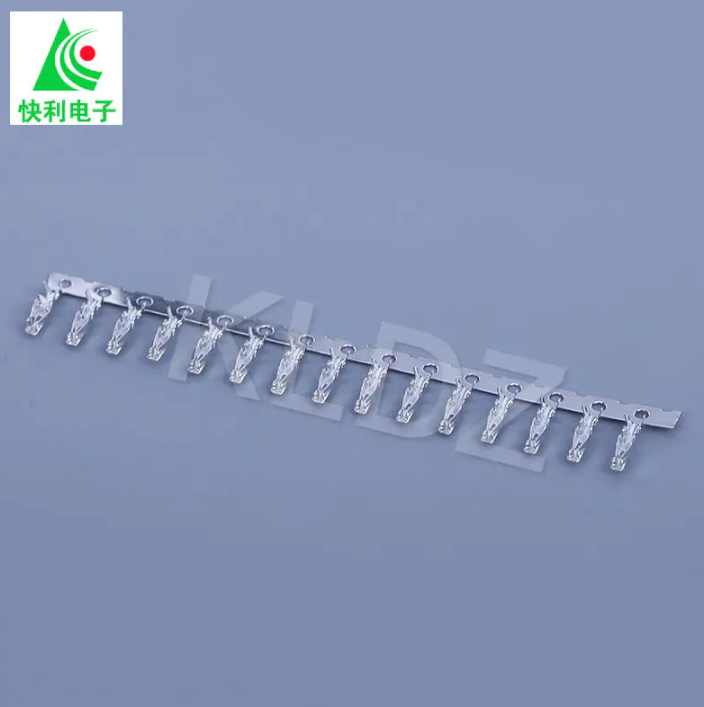
Selecting the correct connectors for a project can prevent costly failures in electronics. Wire To Board Connectors provide a straightforward method to link wires to PCBs without soldering, which is particularly useful in complex assemblies. Among these, Wire To Board Crimp Style Connectors are preferred for their consistent contact quality and mechanical reliability.
When choosing a crimp connector, it is important to match the wire gauge with the terminal specifications. For instance, a 22 AWG wire works well with terminals rated for 5A, while a 28 AWG wire is typically used for signal applications below 1A. Insulation ratings and temperature tolerance, usually ranging from 80°C to 105°C, must also be considered for application in varying environments.
Another key factor is the pitch, or the distance between pins, which affects PCB layout. Common pitches such as 2.0 mm or 2.54 mm provide compact designs, while larger 3.96 mm or 5.08 mm pitches can handle higher currents. Material selection plays a role in electrical performance as well; tin-plated copper is cost-effective and corrosion-resistant, whereas gold plating offers lower contact resistance, around 5–10 mΩ.
Wire To Board Crimp Style Connectors also support multi-row configurations, allowing efficient space utilization in compact devices. Their compatibility with automated insertion machines ensures high-volume production is efficient and consistent. Paying attention to these parameters ensures a reliable connection that performs well in demanding applications such as automotive electronics, industrial controls, and IoT devices.

 English
 Arabic
 French
 Spanish
 Portuguese
 Turkish
 Dutch
Dutch
 Italiano
 Russian
 Romaian
 Portuguese (Brazil)
 Greek
Greek
