


Popular Folding Knife Deployment Mechanisms and Methods
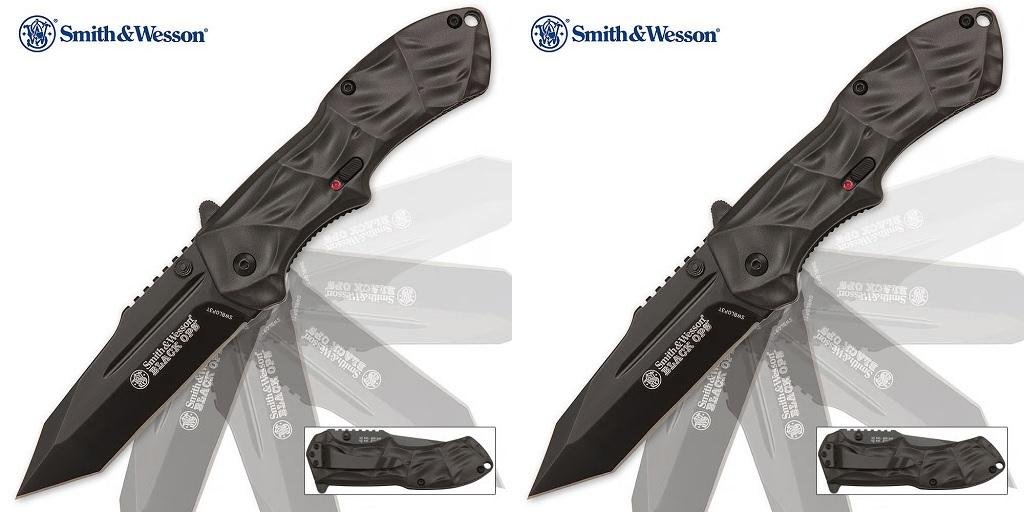
Folding knives can be opened in a lot of different ways, each of which will impact the knife’s utility for a given task. This post will cover some of the more common methods of folding knife deployment.
The Nail Nick
The nail nick is the oldest deployment method commonly used and is still nearly universal on slipjoint folders, including pretty much all traditional patterns like stockman knives and jack knives.
At its most basic, the nail nick is a notch literally carved into the blade, most often on the left side of the blade so as to amenable to right-handed users.
The nail nick assists users in “catching” a nail in the divot so the blade can be pried open, but while reliable and simple, the nail nick requires two hands to open.
Thumb Studs
Thumb studs are studs screwed into the blade near the base. By applying pressure to the stud, the blade can be flipped open. In most cases, this can be done quite easily, and very quickly, with one hand.
Thumb studs on the left side of the blade favor a right-handed user, so as a result, most quality knives with studs have them on both sides of the blade.
Thumb studs are likely the most common deployment method on folding knives.
Thumb Holes
Thumb holes operate according to the same fundamental principles as thumb studs; a user puts pressure on the inner, top side of the hole, flicking the knife open. This feature is common on Spyderco knives.
Like a knife with thumb studs, a knife with thumb holes can be opened easily with one hand, and very quickly once the user has gotten the hang of it.
Though many find thumb holes harder to use than thumb studs, one significant advantage is that thumb holes are naturally ambidextrous. On top of that, they also lighten the knife and can never fall out, which sometimes happens with studs.
Flipper Tabs
Lastly, we have flipper tabs, which are basically spurs of the blade stock that protrude from the top of the handle when the knife is closed.
By putting an appropriate amount of pressure on the tab, and in the right dimension, the blade can be “flipped” open, hence the name. Like thumb studs and thumb holes, flipper tabs are relatively easy to learn to use, can be engaged with one hand, and can be used to open the knife very quickly.
Because of their inherent nature, sometimes flipper tabs are included as an additional feature to a folding knife on top of thumb studs or a hole. In addition, like thumb holes, they are naturally ambidextrous.
Assisted Opening Knife Options
One important distinction to draw here is that an assisted opening knife itself is not a deployment method, but a type of folding knife in which there are internal springs which complete the process of fully deploying the blade once it has been partially opened.
Since assisted opening knives are defined by their internal mechanisms, many of them have the same deployment methods as other pocket knives, such as thumb studs, holes, flipper tabs, or some combination thereof.
It is easier to learn to use an assisted opening knife than it is to deploy a conventional folding knife with one hand, which makes them popular.
Here for a New Pocket Knife?
In the market for a new pocket knife? Whether you want a traditional pattern pocket knife with multiple blades or an assisted opening knife with a flipper tab, visit BudK. They carry tons of knives and cool stuff and this short post can’t do any of it justice in writing.
For more information about Anime Swords and Lock Pick Set Please visit; BudK Worldwide Inc.

 English
 Arabic
 French
 Spanish
 Portuguese
 Deutsch
 Turkish
 Dutch
Dutch
 Italiano
 Russian
 Romaian
 Portuguese (Brazil)
