


About the Yaki Ire Process Applied to Japanese Swords
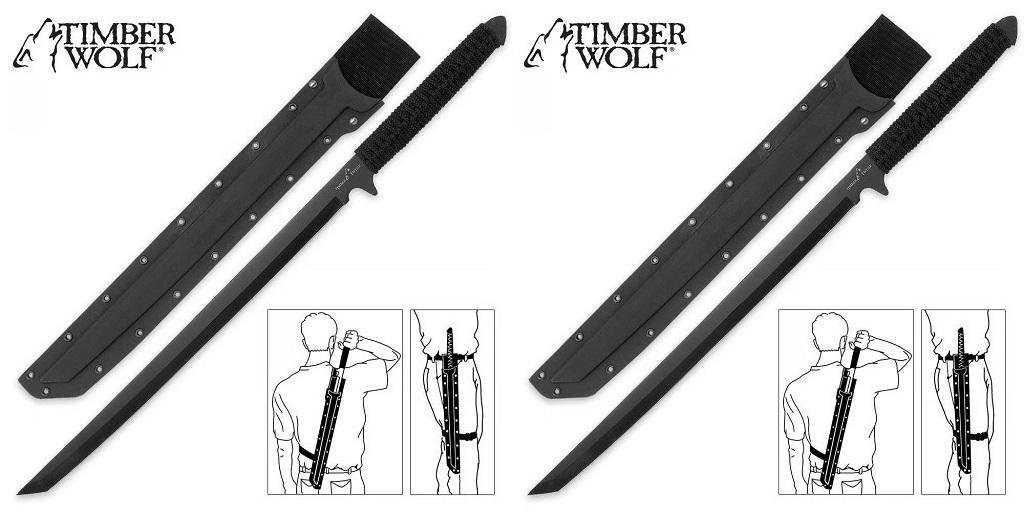
What those who are not familiar with the metallurgy or construction of Japanese swords such as a wakizashi or katana might not know is that, in addition to sporting all the authentic components of the traditional design, and being made from an appropriate steel alloy, they must also be treated according to the principles of “yaki ire”. This is also known as clay tempering, and creates the right mechanical properties in the steel to make it suitable for use as a sword.
This short post will explain what yaki ire is and how it works.
What Is Yaki Ire?
Yaki ire, also known as clay tempering, is the process of applying clay to the blade of a sword so as to afford it a suitable temper that results in a differential hardness along the edge and spine.
How Is It Performed?
First, a special clay mixture must be used in order to be effective. The yaki ire mixture is one part clay mixed with one part sand or crushed gravel along with another part crushed charcoal.
The clay moderates the temperature and the temperature fluctuation of the steel underneath, whereas the sand helps prevent the mixture from cracking and shrinking. The crushed charcoal helps prevent the clay from coming off in the fire as a result of thermal expansion.
An extremely fine grain size is desired in the mixture before application to the blade, for several reasons. One is that homogeneity ensures a high degree of thermal consistency during tempering. It also makes the mixture easier to apply.
Typically, the smith will apply a thicker layer of this mixture along the spine of the blade and a thinner layer along the edge. Then the smith must heat up the blade to a very specific temperature that will yield the desired hardness before the blade is quenched in water, effectively “freezing” the steel in that state.
What Is the End Result?
The thinner clay coating on the edge of the blade cools just a small fraction of a second faster than the spine, but this small difference is the whole reason for the yaki ire process; the steel at the edge forms into an alloy called martensite, which is harder than the ferrite formed at the spine, which is softer, tougher, and better able to absorb abuse. The process also forms the hamon line along the edge, a wavy, frosted pattern with which many Japanese sword collectors should be well-familiar.
The result is that the edge of the blade is harder and better able to hold an edge, as well as to resist contact with targets. The spine, though it will be softer, will also be tougher, which will decrease the likelihood that the blade will snap when struck.
Since the edge and spine are integral to the blade stock, both of these benefits are jointly conferred on the whole sword.
Here for a Wakizashi or Katana?
If you’re in the market for a Japanese sword, such as a wakizashi or katana, visit True Swords. They carry a variety of battle-ready swords, some of which have been made according to traditional processes. Visit their website and get in touch with them directly if you have any questions before buying.
For more information about Japanese Sword and Demon Slayer Black Sword Please visit: True Swords.

 English
 Arabic
 French
 Spanish
 Portuguese
 Deutsch
 Turkish
 Italiano
 Russian
 Romaian
 Portuguese (Brazil)
 Greek
Greek
