


What to Consider When Searching For The Perfect Physics Curriculum
Many of us remember physics as a daunting collection of chalkboard formulas and abstract theories. However, for a child, physics is simply the magic of the world in motion. It is the "why" behind a spinning top, a bouncing ball, or a glowing lightbulb.
Choosing the right physics curriculum is not just about meeting educational standards; it is about nurturing that innate curiosity and turning your home into a space of discovery.
What to Look for in a Modern Physics Curriculum
A great curriculum should act as a roadmap, not a cage. When evaluating options for your family, look for a program that prioritizes conceptual understanding over rote memorization. At its core, physics is a story of how energy and matter interact.
For physics, an ideal curriculum needs to provide a definite, logical sequence of learning. For younger learners, the focus should be on observation and wonder. As students grow, the curriculum should transition to more structured inquiry, introducing the mathematical language of science only after the physical concepts have been experienced firsthand.
Most importantly, ensure the material is accessible; it should speak to your child’s current level while gently stretching their intellectual boundaries.
The Role of Hands-On Learning in Science
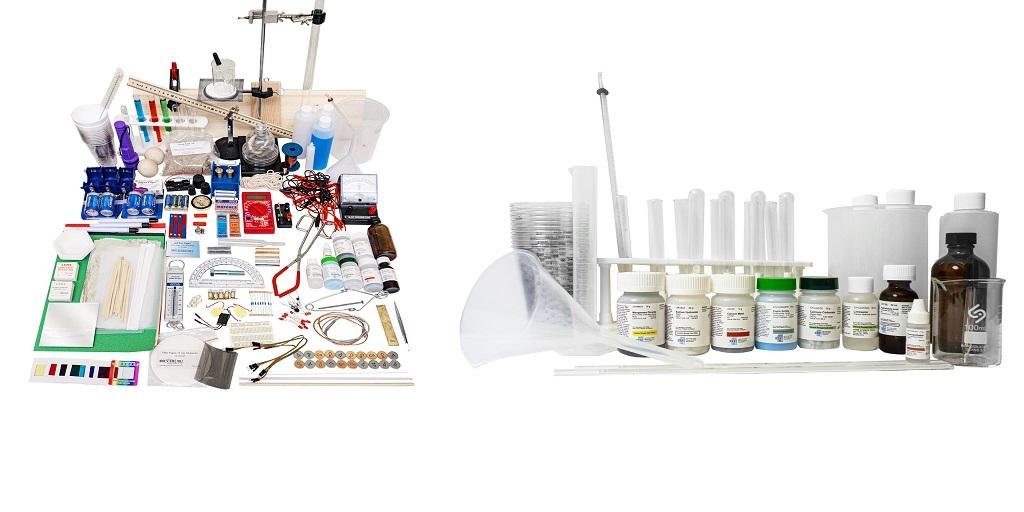
Physics is a tactile subject. You cannot truly understand the laws of motion or the nuances of electromagnetism by reading a paragraph alone. This is where the integration of physical tools becomes essential. A curriculum truly comes to life when it is paired with the right equipment.
Using science lab kits allows children to move from passive observers to active investigators. When a student builds a bridge or assembles a circuit, they are not just "doing a craft"—they are testing hypotheses and learning from trial and error. This bridges the gap between a diagram in a book and the reality of the physical world, making abstract concepts concrete and memorable.
Adapting Physics for Different Learning Levels
One of the beauties of physics is that it scales with the learner. A comprehensive curriculum recognizes that a seven-year-old and a seventeen-year-old look at a magnet with different questions, yet both are practicing science.
- Primary Levels: At this stage, physics should be play-based. Science lab kits for younger ages focus on tactile experiences—playing with shadows, water displacement, or simple pulleys.
- Intermediate Levels: As logic develops, students can begin exploring cause and effect more deeply, using tools to measure speed, force, and heat.
- Advanced Levels: For high schoolers, the curriculum becomes more rigorous. Here, precision equipment is vital for conducting experiments that mirror real-world laboratory work, preparing them for higher education and beyond.
Building Confidence Through Discovery
The goal of a home-based science education is not necessarily to create the next Nobel Prize winner, but to raise a scientifically literate adult who isn't afraid to ask "how?" By selecting a thoughtful physics curriculum and supporting it with hands-on exploration, you are giving your child more than just facts; you are giving them the confidence to solve problems.
Remember, you don’t need to be a physics professor to guide your child. With a well-structured guide and the right experimental tools, you can embark on this journey of discovery together, learning as much from the "failed" experiments as the successful ones.
Home Science Tools provides an extensive selection of textbooks and specialized science lab kits tailored for every age and learning level. Whether the goal is to explore simple machines in elementary school or to conduct complex experiments in high school, these professional-grade tools empower parents to deliver a high-quality science education at home.
For More information about Telescope For Kids and Homeschool Science Curriculum Please Visit: Home Science Tools.

 Arabic
 French
 Spanish
 Portuguese
 Deutsch
 Turkish
 Dutch
Dutch
 Italiano
 Russian
 Romaian
 Portuguese (Brazil)
 Greek
Greek
