


What Makes Some Mixers Better for Resistant Doughs?
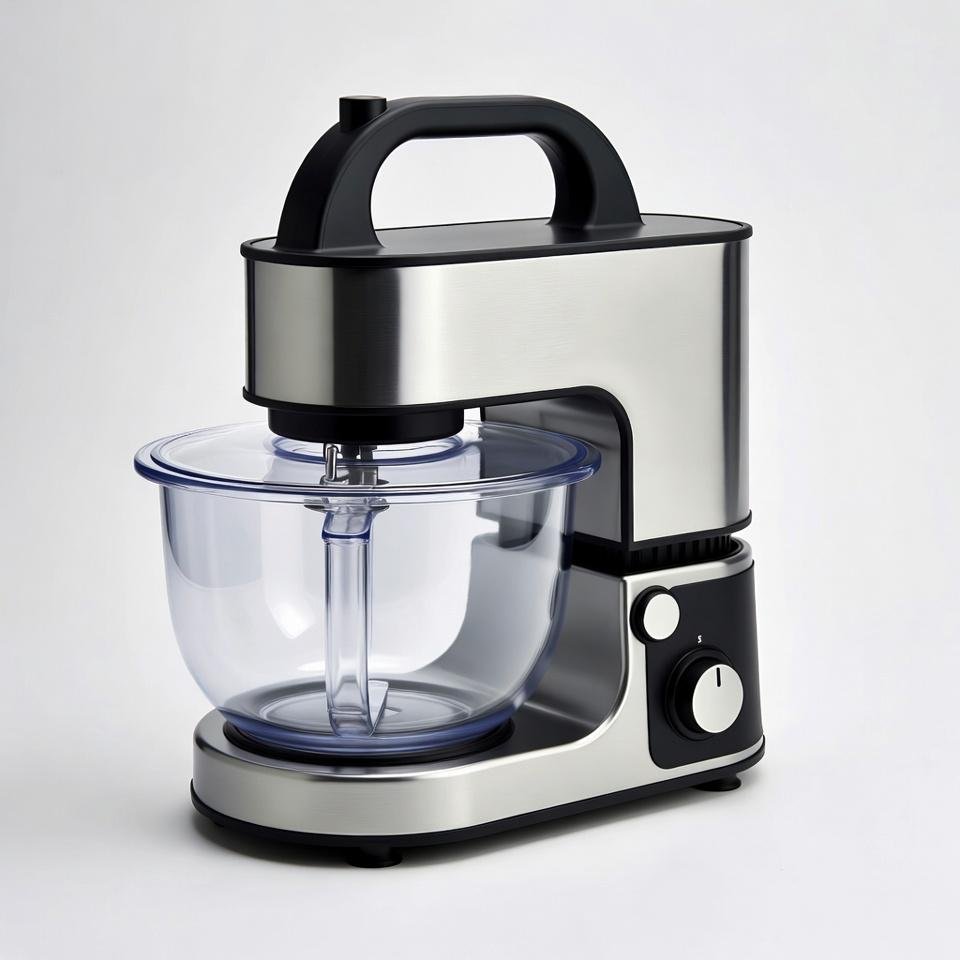
Dense bread formulations and bagel dough present unique challenges in commercial baking operations. Equipment designed for lighter batters struggles when confronted with stiff, resistant mixtures, and products from a Haiou Electric Dough Mixer Factory incorporate engineering solutions specifically for demanding applications. Understanding how machinery processes tough doughs helps operators select appropriate equipment and avoid costly mistakes that compromise production or damage components.
Torque delivery separates equipment capable of handling dense doughs from machines suited only to lighter tasks. An Electric Dough Mixer converts motor rotation into the twisting force needed to move attachments through resistant material. High torque allows steady mixing action even when dough pushes back against movement. Low torque systems stall or slow dramatically under load, failing to develop gluten properly or incorporate ingredients uniformly. Examining torque specifications rather than just motor horsepower reveals true capability with challenging formulations.
Planetary mixing action provides mechanical advantage when processing stiff doughs. This design rotates attachments around the bowl while simultaneously spinning them on their own axis. The dual motion ensures attachments contact dough throughout the bowl rather than simply pushing material in circles. Stiff doughs resist movement, so comprehensive coverage becomes essential for thorough mixing. Single-motion systems may leave unmixed pockets or require constant scraping, reducing efficiency and consistency.
Bowl geometry influences mixing effectiveness with resistant doughs. Curved bottom bowls without corners prevent dough from collecting in areas attachments cannot reach. Straight-sided bowls with sharp angles create dead zones where material escapes mixing action. The relationship between bowl shape and attachment design determines coverage patterns. Well-matched combinations ensure attachments sweep across all surfaces, incorporating ingredients evenly regardless of dough stiffness.
Attachment design specifically for tough doughs differs from standard mixing tools. Dough hooks feature robust construction with reinforced mounting points to withstand the stress of resistant materials. Hook shape and angle determine how effectively they grab and fold dough rather than simply pushing it around the bowl. Spiral configurations pull dough upward and fold it back onto itself, developing gluten networks through repeated stretching. Weak or poorly designed attachments bend under load or fail to engage dough properly.
Speed control allows operators to adjust mixing intensity based on dough characteristics. Starting at low speeds incorporates dry ingredients without creating flour clouds or overloading motors. Gradually increasing speed as dough forms permits gluten development without excessive strain. An Electric Dough Mixer with variable speed settings adapts to different formulations and mixing stages. Fixed-speed equipment lacks this flexibility, potentially under-mixing some recipes while over-stressing others.
Thermal management prevents overheating during extended mixing of tough doughs. Friction between stiff dough and bowl surfaces generates heat that can affect fermentation and final texture. Motors working hard against resistance also produce warmth. Equipment with adequate cooling systems dissipates this heat before it becomes problematic. Overheated motors may trigger thermal protection that shuts down operation, interrupting production at critical moments.
Structural rigidity determines whether equipment maintains alignment under the stress of processing dense doughs. Vibration and movement indicate insufficient structural strength, allowing components to shift during operation. Solid construction keeps motors, gears, and attachments properly positioned despite the forces generated by resistant materials. Flimsy frames allow misalignment that causes uneven mixing, excessive wear, and potential failure.
Timer functions support consistent results when processing tough doughs that require specific mixing durations. Under-mixing leaves gluten underdeveloped, producing dense, crumbly bread. Over-mixing breaks down gluten structure, creating tough, chewy textures. Programmable timers ensure operators mix each batch for appropriate periods, eliminating guesswork and reducing variability between batches.
Safety features protect operators when equipment processes resistant materials. Bowl guards prevent hands from contacting moving attachments during operation. Interlocks stop motors when guards lift, eliminating pinch points. Emergency stops allow immediate shutdown if problems develop. These protections become especially important with powerful equipment handling tough doughs.
Capacity matching prevents overloading that damages equipment or produces poor results. Processing excessive quantities of dense dough overworks motors and gear systems. Following manufacturer capacity guidelines for tough dough applications ensures reliable performance and appropriate mixing action. Equipment specifications and capabilities can be reviewed at https://www.cnhaiou.com/product/ for various production requirements.

 English
 French
 Spanish
 Portuguese
 Deutsch
 Turkish
 Dutch
Dutch
 Italiano
 Russian
 Romaian
 Portuguese (Brazil)
 Greek
Greek
