


How Do Helical Piles Handle Erosion or Shifting Shorelines Over Time?
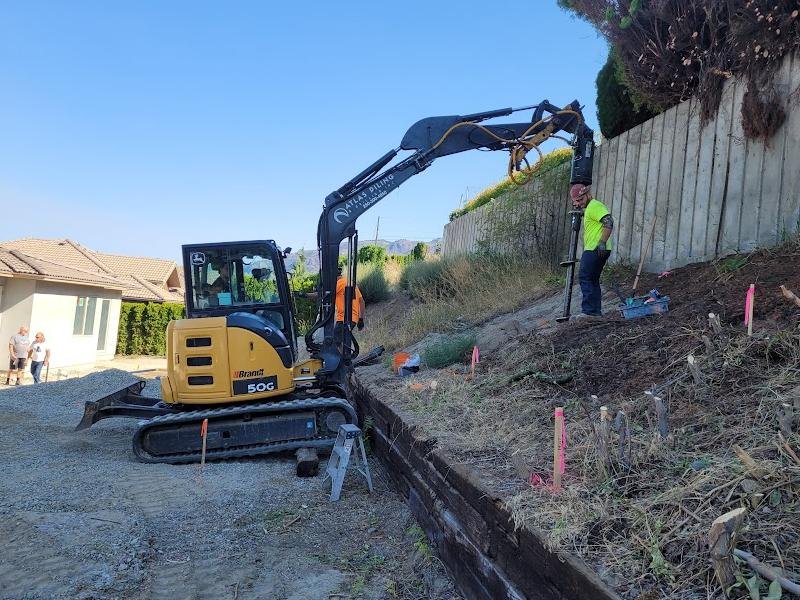
Shoreline environments are defined by constant motion, where waves, seasonal water level changes, and soil loss gradually alter ground conditions. In these settings, long-term foundation performance depends on how load is transferred below unstable surface soils and into deeper, more reliable strata. Helical pile solutions are often specified for shoreline-adjacent structures because they are designed to maintain capacity even as erosion reshapes the surrounding landscape.
Anchoring Below the Zone of Erosion
One of the primary advantages in erosion-prone areas is the ability to anchor structural loads beneath the active erosion zone. As shoreline soils wash away over time, the deeper bearing layers remain largely unaffected. This allows properly engineered systems to resist settlement and rotation, even when the visible ground profile changes significantly. For properties near lakes, rivers, or coastal edges, this deep-load transfer approach supports consistent structural performance without frequent remedial work.
Adapting to Shifting Soil Conditions
Shorelines rarely experience uniform soil movement. Instead, localized scouring, saturation, and freeze-thaw cycles create uneven support conditions. Systems selected for these environments must tolerate differential movement without compromising structural integrity. Helical pile solutions are valued for their capacity to perform in variable soils, allowing designers to adjust depth and spacing based on site-specific data. This adaptability helps maintain alignment and load balance as soil conditions evolve.
Performance During Extreme Weather Events
Storm-driven water level surges and rapid drawdowns accelerate erosion and place sudden stress on shoreline foundations. Long-term resilience depends on resisting both vertical and lateral forces during these events. Deeply embedded support elements help limit displacement when surrounding soils are temporarily weakened. Over repeated weather cycles, this stability reduces the likelihood of progressive movement that can lead to costly repairs.
Inspection, Adjustment, and Service Life
Shoreline projects benefit from solutions that allow for long-term monitoring and adjustment. As erosion patterns change, elevations or attached structures may require modification. Systems designed with accessibility in mind simplify future adaptation without full foundation replacement. This contributes to a longer service life, particularly in regions where shoreline regulations and environmental protections influence maintenance approaches.
Long-Term Value for Shoreline Development
Managing erosion and shifting shorelines is a long-term challenge for residential and light commercial development. Foundation strategies that account for ongoing ground change reduce risk over decades, not just at installation. By relying on deep load transfer and adaptable design, helical pile solutions support durable construction in environments shaped by water movement. The result is improved structural confidence and fewer disruptions as shorelines continue to change over time.
Design Considerations for Sensitive Shorelines
Successful shoreline construction depends on aligning foundation design with environmental constraints and site conditions. Load requirements, soil variability, and access limitations all influence how deep support elements are configured. In areas with active erosion, careful consideration is given to corrosion exposure, installation torque verification, and long-term performance expectations.
Thoughtful planning also helps reduce disturbance to surrounding soils during installation, an important factor near water. By integrating geotechnical data early, designers can specify depths and capacities that remain effective as shorelines retreat or rebuild naturally. This proactive approach supports compliance with local permitting requirements while prioritizing durability, safety, and environmental responsibility throughout the structure’s lifespan. Properly executed, these considerations strengthen long-term outcomes for shoreline developments facing ongoing change.
Looking Ahead Over Decades
Shoreline environments will continue to evolve due to climate-driven water fluctuations and natural sediment movement. Foundation systems chosen today must anticipate gradual change rather than resist it. Long-term planning favors adaptable support strategies that perform reliably as ground conditions shift unpredictably over extended timeframes without compromising safety or usability goals.
For More Information About Drilling Company Bc and Residential Piling Services Please Visit: ATLAS PILING.

 English
 French
 Spanish
 Portuguese
 Deutsch
 Turkish
 Dutch
Dutch
 Italiano
 Russian
 Romaian
 Portuguese (Brazil)
 Greek
Greek
