


How a Multi-Position Cam Switch Actually Works
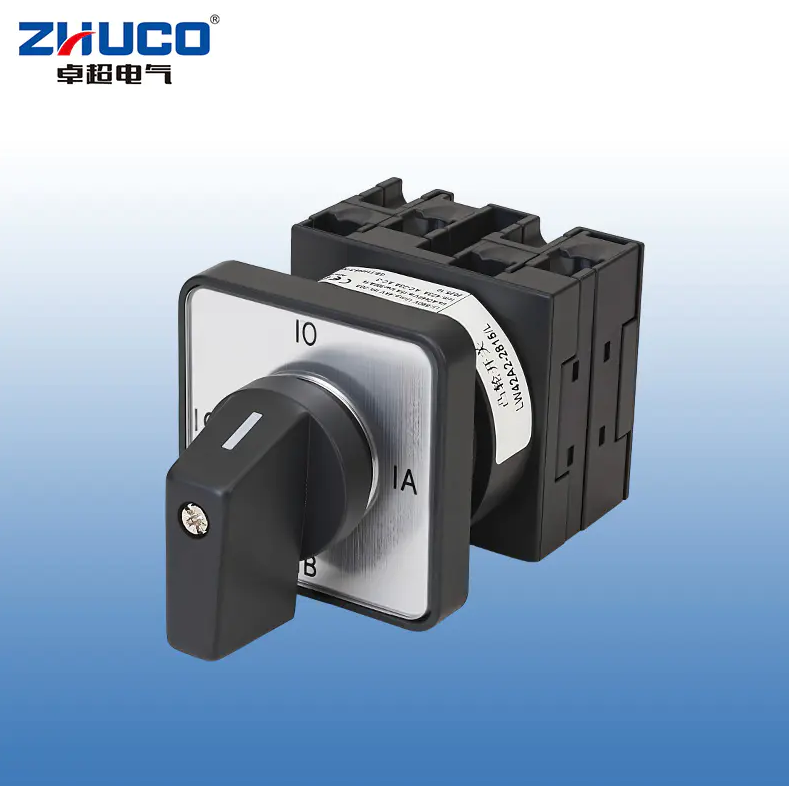
There are components in electrical control panels that never attract much attention until they stop working. The multi-position cam switch is one of them. Rotate the knob, something changes in the circuit — it seems simple enough. But the mechanical intelligence packed into a well-built cam switch is worth understanding, especially if you are responsible for specifying, installing, or maintaining industrial control equipment.
A multi-position cam switch is a rotary switching device that uses a series of shaped cams mounted on a central shaft to open and close electrical contacts at specific rotational positions. As the operator turns the handle, the shaft rotates and each cam pushes against or releases its corresponding contact set, completing or breaking specific circuits depending on the position selected. Because different cams can be profiled differently and stacked along the shaft, a single cam switch can control multiple independent circuit paths simultaneously — each one activating or deactivating in its own sequence as the switch moves from position to position.
This layered contact architecture is what sets the multi-position cam switch apart from simpler rotary switches. A basic rotary switch routes one circuit to different outputs. A cam switch, by contrast, can manage several circuits at once, with each contact set following its own switching logic. This makes the device well-suited for applications that require complex sequencing — switching motor direction, stepping through transformer tap positions, selecting measurement ranges on test equipment, or controlling the operating modes of industrial machinery.
The physical construction of a multi-position cam switch is designed for durability in demanding environments. The switch body is typically made from glass-filled thermoplastic or die-cast metal, and the contact elements use silver alloy for reliable conductivity across thousands of operating cycles. Most multi-position cam switches are rated for panel mounting and carry IP-rated enclosures to resist dust and moisture ingress. Available in a range of pole configurations, current ratings, and position counts — commonly anywhere from two to twelve positions — the cam switch gives control engineers a versatile and mechanically robust tool for managing switching sequences that would be difficult to achieve with any simpler device.

 English
 Arabic
 French
 Portuguese
 Deutsch
 Turkish
 Dutch
Dutch
 Italiano
 Russian
 Romaian
 Portuguese (Brazil)
 Greek
Greek
