


The Future of Logistics: Key Artificial Intelligence in Supply Chain Market Trends
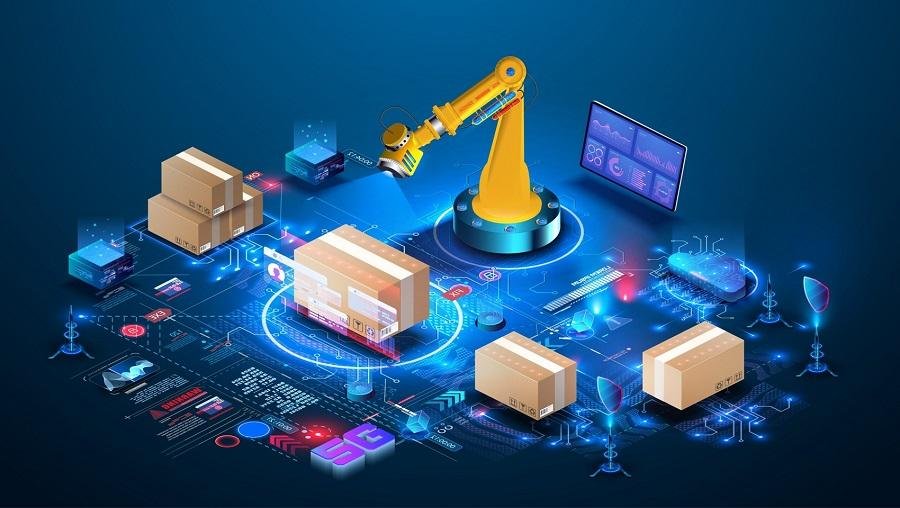
The supply chain of the future is being built today, shaped by a series of powerful and transformative Artificial Intelligence in Supply Chain Market Trends. The most significant trend is the evolution from simple predictive analytics to advanced prescriptive and autonomous capabilities. It's no longer enough for an AI system to simply predict that a shipment will be delayed. The leading edge of the market is moving towards prescriptive analytics, where the AI not only identifies a potential problem but also recommends a specific course of action (e.g., "Re-route shipment X via carrier Y to avoid the port congestion"). The ultimate goal is the autonomous supply chain, where the system can execute these decisions automatically, without human intervention, for routine issues. This trend towards greater autonomy is essential for managing supply chains at the speed and scale that modern commerce demands.
A second major trend revolutionizing supply chain visibility and planning is the rise of the Digital Twin. A digital twin is a dynamic, virtual replica of a physical supply chain network, including its warehouses, transportation lanes, and inventory levels. By feeding this virtual model with real-time data from IoT sensors, GPS, and other sources, AI can be used to simulate the impact of different scenarios. For example, a manager could use the digital twin to test the effect of closing a distribution center or to war-game responses to a potential supplier shutdown. This "what-if" analysis capability allows for more robust and resilient planning. AI uses the digital twin to continuously monitor operations, identify bottlenecks, and run optimizations, turning it from a static model into a living, breathing command center for the entire supply chain.
The trend towards sustainability and ethical sourcing is also becoming a major driver for AI adoption. Consumers and regulators are increasingly demanding greater transparency into where and how products are made. AI is becoming a critical tool for meeting these demands. AI algorithms can analyze vast datasets from suppliers to identify potential risks related to environmental non-compliance, unethical labor practices, or geopolitical instability. It can also be used to optimize logistics to minimize carbon emissions by reducing empty miles and choosing more fuel-efficient routes. By providing traceability and analytics for ESG (Environmental, Social, and Governance) metrics, AI is helping companies build more responsible and sustainable supply chains, turning a compliance requirement into a source of brand value and competitive advantage.
Finally, the increasing sophistication of robotics and automation, all guided by AI, is a trend that is physically reshaping the supply chain. Warehouses and distribution centers are being transformed by autonomous mobile robots (AMRs) that can intelligently navigate the facility to pick, sort, and transport goods, working alongside human employees to increase productivity. In logistics, the long-term vision includes autonomous trucks and delivery drones, which are currently in advanced stages of testing. Computer vision systems, powered by AI, are being deployed on production lines and in warehouses for automated quality control, identifying defects far more quickly and accurately than the human eye. This fusion of intelligent software with physical robotics is automating the most repetitive and labor-intensive tasks, addressing labor shortages and driving massive efficiency gains.
Explore More Like This in Our Regional Reports:

 English
 Arabic
 French
 Spanish
 Portuguese
 Deutsch
 Turkish
 Dutch
Dutch
 Italiano
 Russian
 Portuguese (Brazil)
 Greek
Greek
