


Inside Corrugated Cup Manufacturing Lines
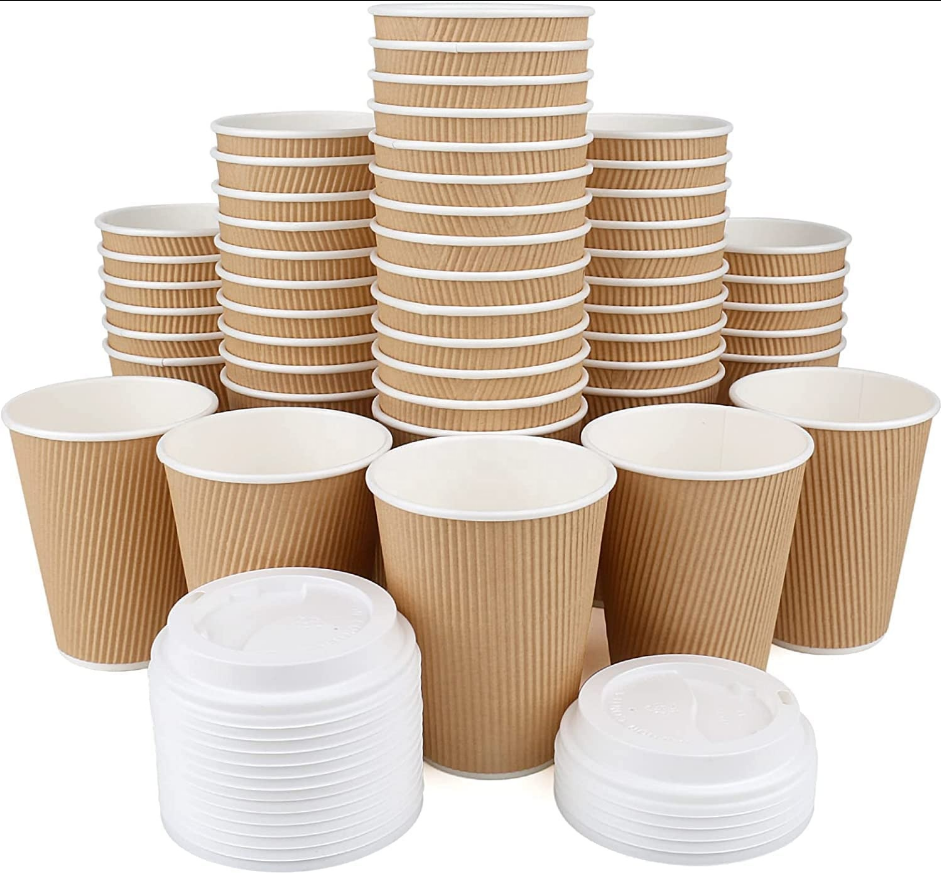
The production of Corrugated Paper Cups involves multiple precision-controlled manufacturing steps that combine paper engineering, coating technology, and thermoforming processes.
The process begins with paperboard selection, typically virgin wood pulp fibers with consistent density of 190–320 GSM. The inner surface is coated using extrusion technology with a polyethylene (PE) layer of approximately 18–20 g/m², ensuring waterproof performance.
Next, corrugated forming machines create a fluted middle layer. The flute height usually ranges from 1.2 mm to 1.8 mm depending on insulation requirements. This layer is bonded between the outer and inner paperboard layers using starch-based adhesives under high pressure and heat.
The laminated structure is then cut into fan-shaped blanks, which are rolled and sealed into cylindrical cup bodies. Bottom sealing is achieved using heat and pressure, forming a leak-resistant base. Rim curling adds structural reinforcement and improves drinking comfort.
Key production parameters include:
Forming temperature: 180–220°C
Line speed: 120–200 cups/min (industrial scale)
Adhesive type: food-safe starch adhesive
Waste tolerance: <2% under controlled production
Corrugated Paper Cups produced through this method provide strong mechanical integrity and consistent thermal insulation, making them suitable for high-volume beverage service environments.

 English
 French
 Spanish
 Portuguese
 Deutsch
 Turkish
 Dutch
Dutch
 Italiano
 Russian
 Romaian
 Portuguese (Brazil)
 Greek
Greek
