


How Does a Hot Forging Machine Work?
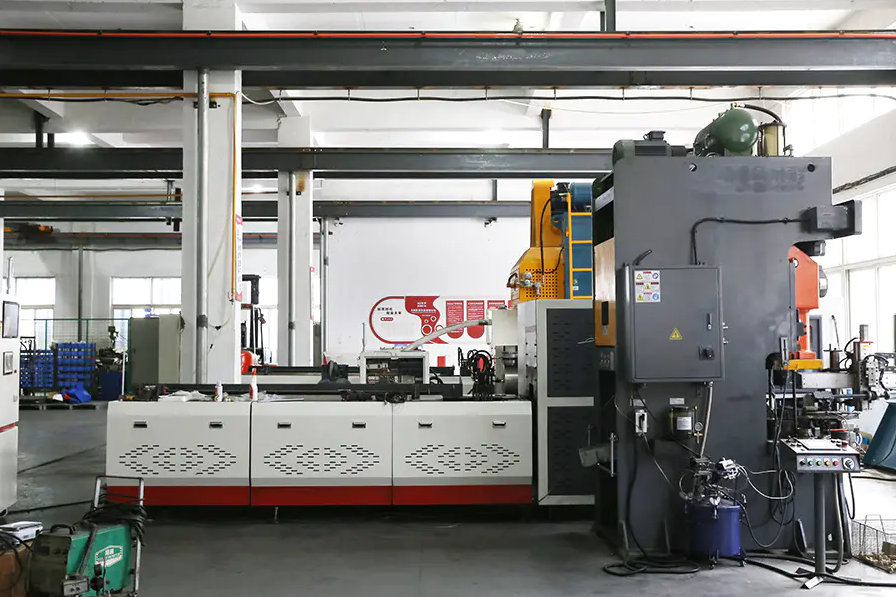
Professionals researching a Hot Forging Machine Tool often begin with basic questions about how it functions and what issues they might encounter. At the heart of hot forging is a controlled heating and deformation process in which a billet or workpiece is heated to a plastic state—typically about 75% of its melting temperature—to allow significant deformation under compressive force.
One frequent question is how the machine actually heats and shapes metal. In practice, the metal is heated in a furnace or induction heater before being transferred into the forging press or hammer. The die or tooling then compresses the hot metal into the desired shape. This sequence helps refine the grain structure and improves strength in the finished component.
Another issue often brought up on discussion forums is tolerance and dimensional precision. Because hot forging involves working metal at high temperatures, achieving tight tolerances can be more challenging than with cold processes. However, careful control of die design and temperature profiles can help minimize dimensional variation and reduce the need for extensive finishing operations.
Maintenance questions also come up frequently. Users ask about how to handle wear on dies and tooling, since repeated exposure to high temperatures and pressure will degrade surfaces over time. Regular inspection and refurbishment, paired with proper cooling management, are common strategies discussed among technicians.
By exploring these frequently asked questions and real-world forum discussions, potential buyers and operators can better understand what a Hot Forging Machine Tool entails before making equipment decisions.

 English
 Arabic
 French
 Portuguese
 Deutsch
 Turkish
 Dutch
Dutch
 Italiano
 Russian
 Romaian
 Portuguese (Brazil)
 Greek
Greek
